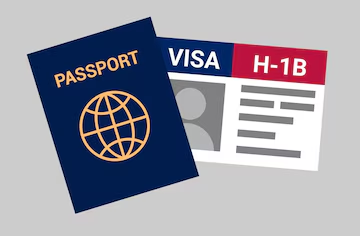
U.S. Senators have launched an inquiry into several major technology companies — including TCS, Cognizant, Amazon, Microsoft, and others — over their use of H-1B visas following widespread layoffs across the American tech industry. Lawmakers are increasingly concerned that U.S. workers are being displaced and replaced by foreign employees hired through the H-1B visa program. This scrutiny has reignited debates about fairness in hiring, the protection of domestic jobs, and the broader implications of visa-dependent employment models. The ongoing investigation could lead to significant reforms in immigration policies and reshape how technology giants approach workforce planning and global talent acquisition in the United States.

TCS, Cognizant, Amazon, MicrosoftH-1B visa program


US lawmakers are looking closely at big tech companies like TCS, Cognizant, and others for how they use H-1B visas. Senators Charles Grassley and Richard Durbin said that while these companies are firing many American workers, they are also applying for thousands of H-1B visas to bring in foreign workers. This has raised doubts about whether their hiring process is fair or not.
TCS and Cognizant Under the Spotlight :- Tata Consultancy Services (TCS) recently announced layoffs affecting more than 12,000 employees, including American workers. In fiscal year 2025, the company received approval to hire 5,505 foreign employees under the H-1B visa program. The Equal Employment Opportunity Commission (EEOC) is reportedly investigating TCS for allegedly replacing older U.S. staff with H-1B hires.
Similarly, Cognizant executed major layoffs while securing approvals to hire 2,493 foreign workers through the H-1B program in 2025. Previous rulings against the company highlighted preferential treatment toward South Asian H-1B holders, resulting in punitive damages. Emails requesting comments from both companies have so far gone unanswered. Other Tech Giants Under Investigation
Amazon recently laid off tens of thousands of employees, citing the rise of AI automation as a contributing factor. However, the company simultaneously filed petitions to hire 10,044 foreign workers under H-1B visas in 2025.
Google also implemented widespread job cuts — including managerial roles — yet received approval to hire 4,181 foreign employees. Meta reduced nearly a quarter of its workforce between 2022 and 2023, while obtaining authorization for 5,123 H-1B hires in 2025.
Meanwhile, Microsoft, despite posting record profits, laid off over 16,000 employees and filed applications for 5,189 new H-1B workers. Senators have criticized such practices, arguing that companies are prioritizing cost-efficiency and automation over American talent.
The Intensifying H-1B Visa Debate :- Senators Charles Grassley and Richard Durbin contend that the H-1B and L-1 visa programs are being exploited to displace U.S. workers. They have reintroduced legislation aimed at closing loopholes, increasing transparency, and ensuring fair treatment for domestic employees. The proposed law seeks to crack down on fraudulent visa filings while safeguarding opportunities for American workers. Lawmakers have also cautioned corporations that continued preferential hiring practices could invite stricter enforcement and reputational consequences.
Global Implications for Tech Professionals With the growing prevalence of remote work, global hiring, and AI adoption, competition for tech roles has become more intense than ever. Global firms such as TCS, Microsoft, Amazon, and Meta often rely on foreign talent through visa programs to meet evolving skill demands.
For tech professionals in India and abroad, this presents both opportunity and uncertainty. While global job prospects remain promising, increased scrutiny and potential policy changes could impact visa availability and hiring timelines. The ongoing investigation into TCS and other Big Tech companies marks a turning point in U.S. tech employment policy. The renewed focus on the H-1B visa program underscores that companies must balance global expansion with domestic workforce welfare. Tech professionals are advised to stay informed, track policy developments, and plan their careers strategically. As Big Tech hiring practices come under tighter scrutiny, future visa approvals are likely to become more competitive and heavily regulated.